

The short answer
- You can build a real merch shop with AI in a weekend, for almost nothing upfront, using print on demand so there is no stock to buy and nothing to write off.
- AI does the three jobs that used to need three suppliers: the artwork, the product copy and the shop pages.
- The design is the easy part. The bit people skip is giving every product its own page with proper structured data, which is what makes individual items findable in Google Shopping and recommendable by AI assistants.
- Keep the range short, price it from the base cost up, and order a sample of everything before you tell anyone it exists.
Why an AI school ended up selling hoodies
People kept asking. Someone would finish a session, ask whether we had a T-shirt, and I would say no, because the honest answer was that merch felt like a distraction from teaching. Then enough people asked that it stopped being a distraction and started being a reasonable thing to want.
The old version of this project involved a designer, a print broker, minimum orders, a spreadsheet of sizes and a pallet in someone's garage. That is roughly four weeks and a few thousand pounds of risk before anyone buys anything. The version I actually built took a weekend and cost less than a hundred pounds, almost all of it on samples, because AI covered the design and the copy and print on demand removed the stock entirely.
This is a note about how, written the way I would explain it to someone in the room. If you want to see the result first, it is the shop. Eight items, one crest, no warehouse.
The eight steps, in the order I actually did them
Nothing here needs a technical background. It needs decisions, which is the part AI cannot do for you.
Step 1Decide what the shop is actually for
This sounds like the soft question you skip to get to the fun bit. It is the one that quietly determines everything else. A shop that exists to make money looks different from one that exists to give a community something to wear, and if you do not choose, you end up with a range that does neither.
Ours has two jobs: give people who have been through training something they will genuinely wear, and put the revenue back into the free resources we give away. That decision wrote the brief for everything downstream. It is why the crest is small and embroidered on the left chest rather than splashed across the front, why the range is eight items instead of thirty, and why the copy on the shop page says what the fabric weighs rather than shouting about a movement.
The test: if you cannot say in one sentence who the shop is for and what it is meant to do for them, you are not ready to generate artwork yet. Ask an AI assistant to interrogate you on it before you design anything. Tell it to ask you five hard questions about the shop's purpose and refuse to let you off with vague answers.
Design the artwork with AI
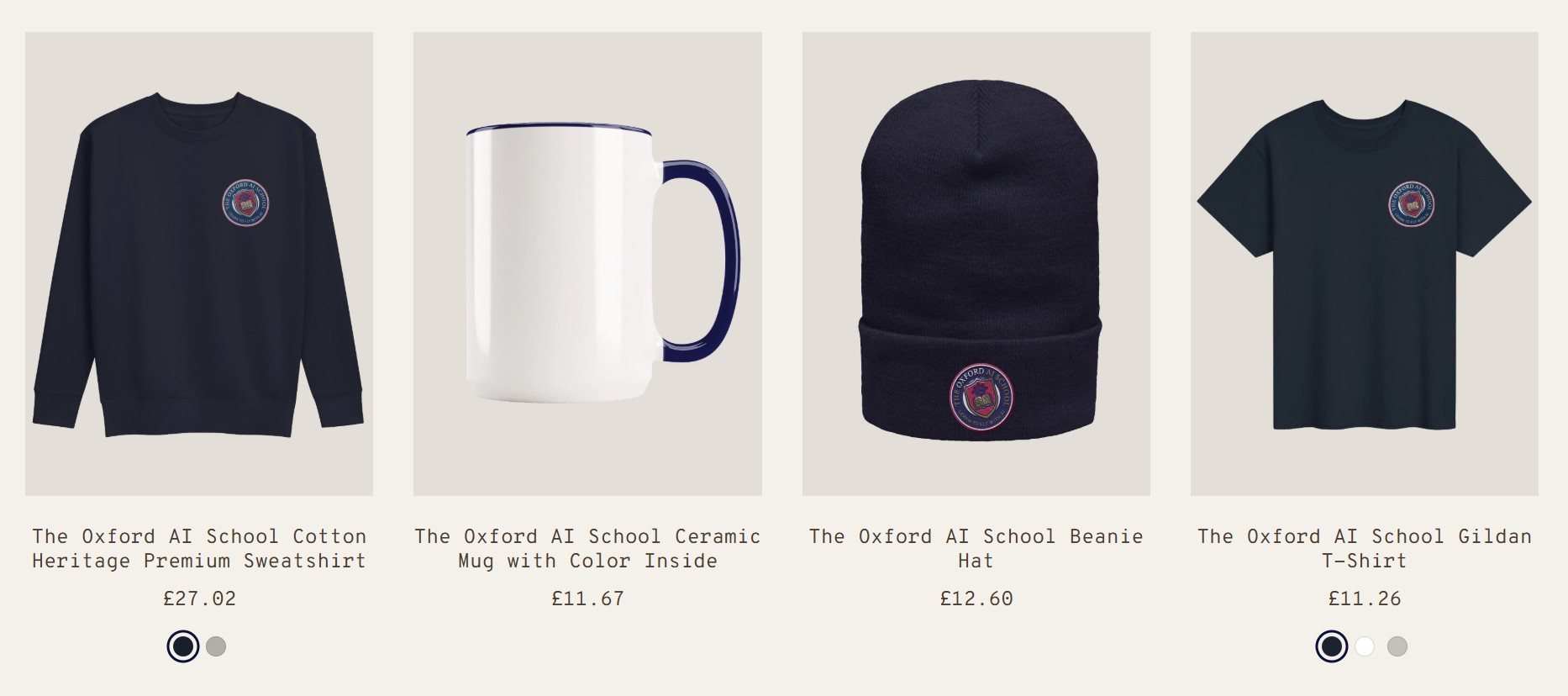
We already had a crest. What we did not have was the fun version, so the first thing I generated was the design at the top of this page: the logo the school would have had if it had opened in the 16th century rather than last year. Griffin on one side, robotic winged lion on the other, neural network on the shield, motto on the ribbon. It is now printed across the chest of the Medieval Logo Heavy Tee, which is the item people ask about most.
Describe the object, not the vibe
The single biggest improvement in my image prompts came from stopping describing how I wanted it to feel and starting to describe what the thing physically is. "Premium, sophisticated, tech-forward" produces mush. Naming the components produces a crest.
A traditional heraldic coat of arms, carved in relief. Centre: a burgundy shield bearing a gold open book with circuit-board tracery and a neural network node diagram above it. Left supporter: a gold griffin, rampant. Right supporter: a robotic winged lion in polished silver and gold. Above: a knight's helm with a crown and blue and gold mantling. Banner across the top reading THE OXFORD AI SCHOOL. Ribbon beneath reading LEARN TO FLY WITH AI. Symmetrical, front-on, deep navy and gold and burgundy palette.
Iterate on one element at a time
Do not re-prompt the whole thing when one part is wrong. Say "keep everything, change only the lion" and you converge in five goes instead of fifty. Our lion started as an ordinary heraldic lion, became too robotic, then landed somewhere in between.
Check the lettering at full print size
This is where image models still fall over. Ornate illustration, they are excellent at. Small text, they mangle. Every version of our crest needed the banner text checking letter by letter at the size it would actually print, and a couple of otherwise lovely generations went in the bin because the motto had grown an extra letter. If your design leans on typography, set the type yourself and let AI do the illustration around it.
On ownership: check the commercial terms of whichever image tool you use before you sell anything, and be aware that UK copyright law is still unsettled on whether purely AI-generated artwork is protected at all. For a fun secondary design like ours that is a risk worth taking. For your primary brand identity, use AI for the concept and pay a human to redraw the final file as vector artwork.
Choose a print-on-demand partner
Print on demand is the reason a shop like this is now a weekend project rather than a business plan. Nothing is made until someone orders it, so there is no stock, no minimum order and no cash tied up in boxes of unsold size-large hoodies. Ours is fulfilled through Fourthwall, printed at whichever facility is nearest the customer.
The four things worth comparing, in the order they will bite you:
- The blanks, not the platform. You are selling someone else's garment with your logo on it. A cheap blank with a beautiful print is still a cheap garment, and that is the thing your customer judges you on.
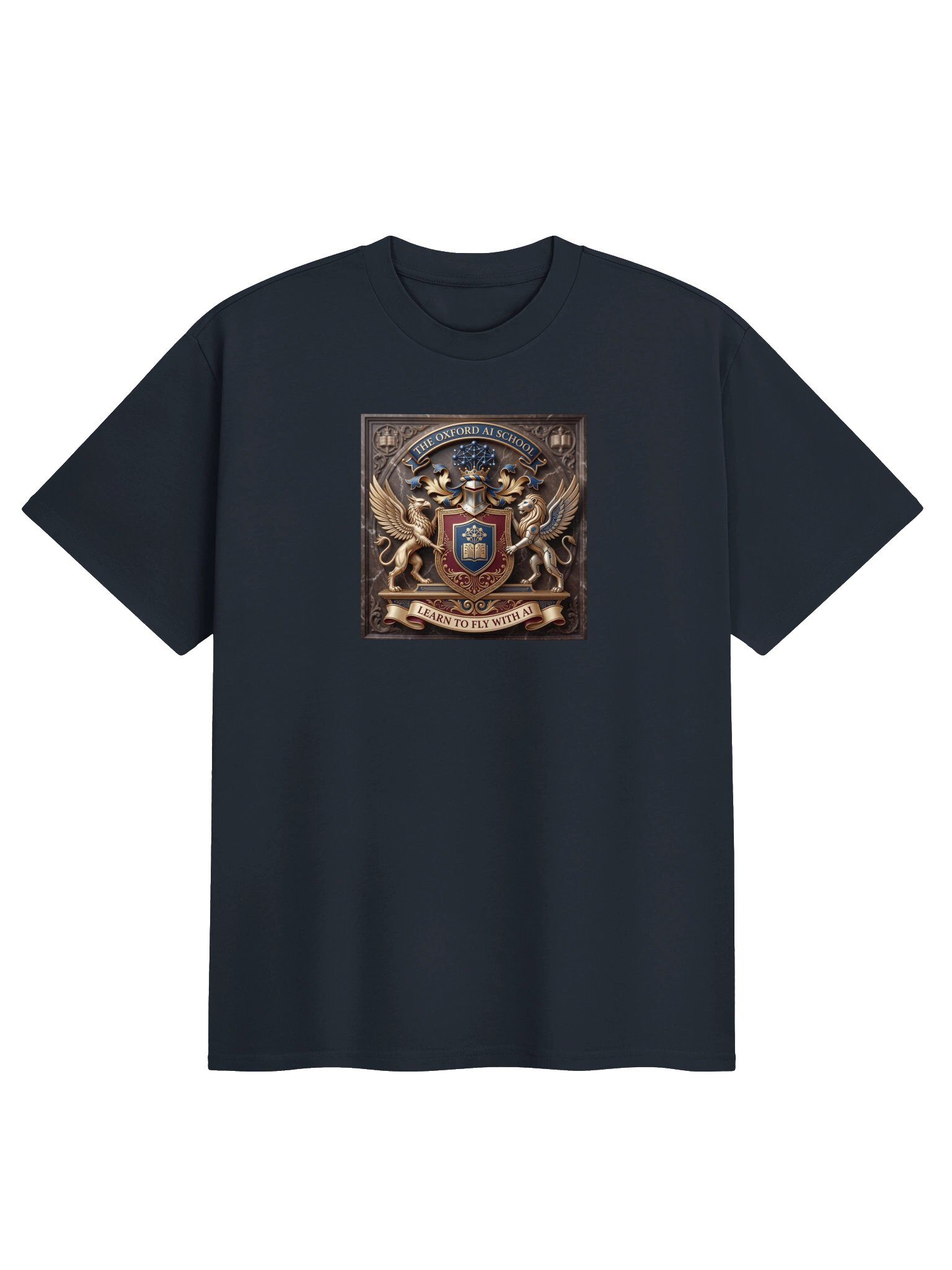
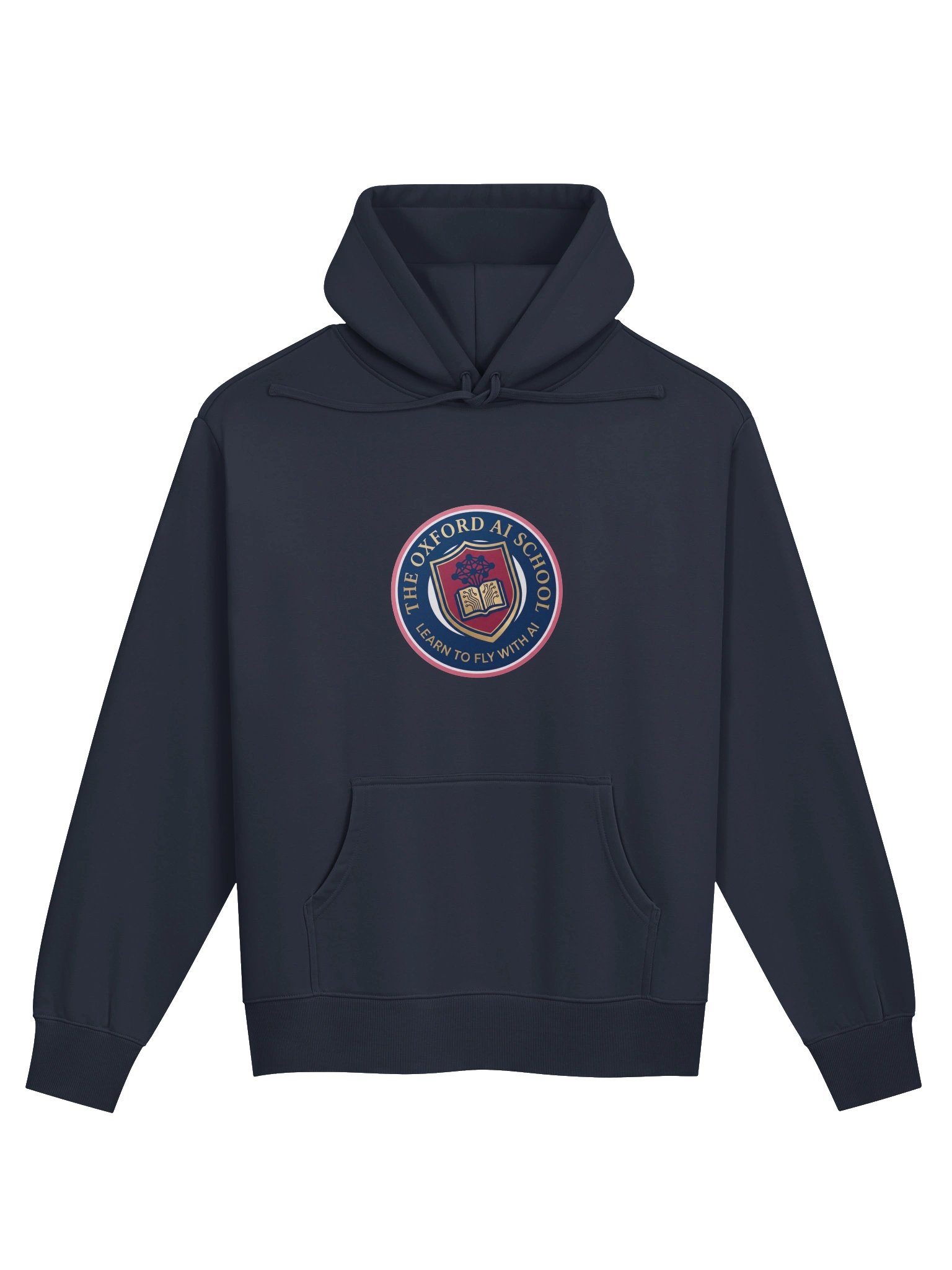
- Embroidery or print. Embroidery costs more, survives the wash better and looks like a club badge. Print is cheaper and right for full-colour artwork. We use embroidery for the crest on the sweatshirt and hoodie, and print for the medieval design, because you cannot embroider that many colours sensibly.
- Where it ships from. If a partner prints everything in one country, your overseas customers pay eye-watering delivery. Check this before you write "ships worldwide" anywhere.
- The base cost. It sets your floor price. Work it out per item before you fall in love with a product.
Keep the range deliberately short
Print-on-demand catalogues are enormous and it is very tempting to switch on everything. Resist it. A shop with eighty products is a shop nobody finishes looking at, and every extra variant is another mockup to check and another price to keep honest.
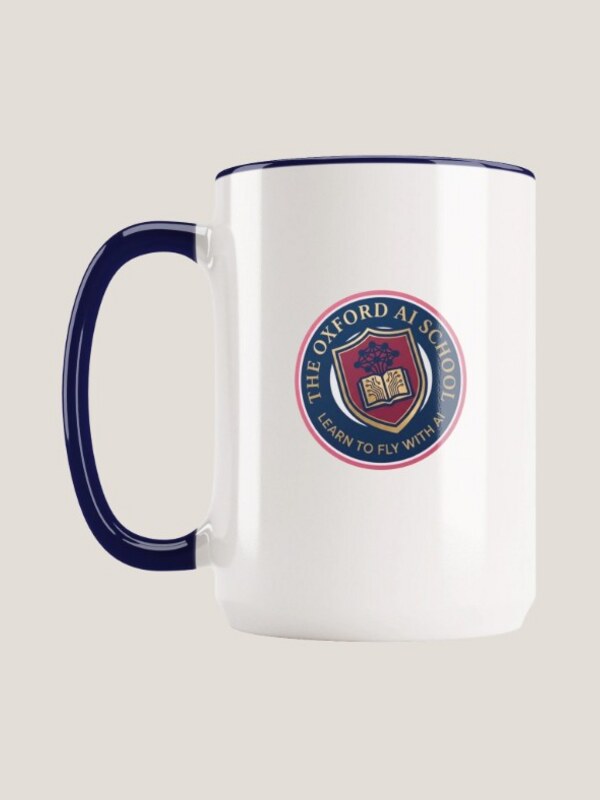
Eight items covers the ground properly: one warm layer, one smart layer, two T-shirts at different price points, a hat, and a mug for the people who want the crest on their desk rather than on their chest.
Write the product copy with AI, then cut it hard
AI is genuinely good at product copy and genuinely terrible at knowing when to stop. Every first draft came back forty per cent longer and considerably more excited than anything I would say out loud.
Brief it with facts, not adjectives
Give it the fabric weight, the fit, the colourways, the sizes and one line on who the item is for. Then set a hard limit. This is close to the prompt I used:
Write 40 words of product copy for an 8.2oz carded cotton boxy-fit tee, navy, S to 3XL, with a full-colour medieval coat of arms printed across the chest. Audience: British business owners who have done AI training and have a sense of humour. Dry, understated, British English. No superlatives, no "elevate", no exclamation marks. Say what it is.
Then delete half of it
The line that survived on that product is "the logo we would have had if the school opened in the 16th century". That was mine, not the model's, and it took ten minutes of pushing back on drafts to find it. AI got me to a competent 80% in about four minutes; the last 20% is you, and it is the 20% people remember.
Step 6Sort the product imagery
Your print partner will generate mockups of every item and they are good enough to launch with. The rule I would tattoo on this step: every image has to match what turns up in the parcel. It is very easy now to have AI tidy a mockup, brighten a colour or smooth a crease, and it is a fast route to refunds and a bad review. Use AI on the background if you like. Do not use it on the product.
Order one of everything. The photos will tell you a garment is navy. The parcel will tell you whether it is the navy you meant.
Step 7Build one page per product so search engines and AI can read it
This is the step almost everyone skips, and it is the one that decides whether the shop is ever found. Most print-on-demand storefronts are a single page listing everything. That gives Google one URL for eight products, which means no individual item can appear in a shopping result, and no AI assistant can answer "where can I buy an AI school hoodie" with anything specific.
A unique, indexable URL for every item
We generated a page per product on our own domain, each one at its own address like /shop/heavy-hoodie, each carrying Product structured data with the price, currency, availability, image and a link through to checkout. An AI assistant asked about buying the merch has something concrete to point at. Without it, there is nothing to recommend.
A product feed, and honest prices in it
A product feed is a machine-readable list of everything you sell, which is what Google Merchant Centre wants and what makes items eligible for Shopping. AI is good at generating one and equally good at inventing a plausible price, so check every line against the live product. A feed that disagrees with your page gets rejected, and rightly.
Then put it in your sitemap and your llms.txt
Add every product URL to your sitemap so search engines crawl them, and describe the range in plain language in your llms.txt so AI systems reading your site have the prices and links in a form they can actually use. Two small files, and the difference between a shop that exists and a shop that gets recommended.
Price it so it does not quietly lose money
Start at the base cost, add the platform's cut, then add the margin you want, and only then look at whether the number is one a human would pay. Do this per item, not as an average across the range, or your cheapest product ends up subsidising your most popular one.
Then check the delivered price for someone ordering from abroad, because that is the number that loses you the sale, and it is not on the page you have been staring at.
What it actually cost, and how long it took
| The job | The old way | With AI and print on demand |
|---|---|---|
| Design the artwork | Designer, 1–2 weeks, a few hundred pounds | An afternoon of prompting, no extra cost |
| Stock | Minimum order, cash upfront, storage | None. Nothing is made until it sells |
| Product copy for 8 items | Copywriter, a few days | An hour of drafting and cutting |
| Product photography | Studio day, samples shipped in advance | Partner mockups, checked against samples |
| Shop pages and structured data | Developer, several days | An evening with an AI coding assistant |
| Cash at risk before the first sale | Typically £2,000–£4,000 | Under £100, all of it samples |
Total elapsed time was a weekend of real work, plus a fortnight of waiting for samples before we told anyone. The AI was never the slow part. Deciding what the shop was for, and the post, were the slow parts.
The four mistakes I made
- I designed before I decided. I had three lovely crests before I had answered what the shop was for, and two of them were instantly useless once I had.
- I trusted a generated price. One product's price in the first draft of the feed was a number the model had invented that looked entirely reasonable. Check every figure AI produces about money. Every one.
- I let the copy stay keen. The first version of the shop page had "elevate" in it. I do not use that word. Neither does anyone I know.
- I nearly launched without product pages. The single-page version was ready first and it was tempting to ship it. It would have been invisible.
What I would tell you to do differently
Order the samples on day one, before you design anything, because they take longer than everything else combined and you cannot honestly write about a garment you have not held. Then use the waiting time on the boring, high-value work: the product pages, the structured data, the feed, the sitemap. That is the part that decides whether anyone finds the shop, and it is the part AI makes almost pleasant.
And keep the range short. Every time I have looked at adding something, the honest answer has been that eight good items beat twelve where four are filler.
See the shop this note is about
Eight items, one crest, printed on demand and shipped worldwide. The Medieval Logo Heavy Tee carries the AI-generated coat of arms at the top of this page, and everything else carries the embroidered school crest. Merch revenue funds the free AI resources we give away.
Browse the merchWant to build things like this yourself?
This shop is what a couple of days of practical AI skills looks like when you point them at a real job. That is what we teach: not theory, your actual work.
Book a callPractical AI training for your team
The Oxford AI School delivers plain-English AI training in Oxfordshire and London, across the UK, and live online for international teams. Sessions cover basic and advanced AI skills, brand and design work, websites, marketing and GEO.
Programmes that cover the ground in this note
Brand Guidelines & Design Style With AI
Build a consistent brand look, including artwork and imagery, using AI tools.
Explore this trainingHow to Build the Perfect Website With AI
Plan, build and publish a real site, structured data included, with AI help.
Explore this trainingCreate & Launch Your New Business With AI
Take an idea to a launched product, shop and website in one programme.
Explore this trainingIntroduction to GEO
Learn how customers and AI assistants find and recommend businesses.
Explore this trainingHow to make your own merch shop with AI: frequently asked questions
Can AI really design a logo good enough to print on merch?
Yes, for a decorative mark like our medieval crest. Image models are very good at ornate, symmetrical, illustrative artwork, which is exactly what a coat of arms is. Where they still struggle is small lettering and precise geometry, so keep any text minimal and check the file at full print size before you commit. If the design is your primary brand identity rather than a fun one-off, get a designer to redraw the final version as vector artwork.
How much does it cost to start a merch shop with AI?
Almost nothing upfront if you use print on demand. There is no stock to buy and no minimum order, so your only real costs are the AI subscription you probably already pay for and a sample of each item so you know what you are actually selling. We spent under a hundred pounds on samples and nothing on stock. The trade-off is a higher per-item cost and a thinner margin than bulk printing.
How long does it take to build a merch shop with AI?
A weekend of focused work for the design, the range, the copy and the shop pages, then a week or two of waiting for samples before you switch it on publicly. The slow part is never the AI. It is deciding what the shop is for and waiting for the post.
Do I need to own the AI-generated design?
Check the terms of the tool you use before you sell anything. Most major image models grant commercial use of what you generate, but UK copyright law is still unsettled on whether purely AI-generated work attracts copyright protection at all, which matters if you ever need to stop someone copying it. The safest route for a design you intend to build a brand on is to use AI for the concept and have a human redraw the final asset.
Why does each product need its own page?
Because a single shop page gives search engines one URL for eight products, and neither Google Shopping nor an AI assistant can recommend an item it cannot address. One page per product, each with Product schema, a real price and availability, is what makes individual items eligible to appear in shopping results and in AI answers about where to buy something.
Will AI write product descriptions that actually sell?
Only if you brief it properly and then cut what it gives you. Ask for copy with no adjectives, feed it the fabric weight, the fit, the colours and who the item is for, and cap it at forty words. The first draft will be twice as long and twice as keen as it needs to be. Deleting half of it is the job.
Is print on demand worth it compared to bulk printing?
For a first shop, yes. Bulk printing wins on margin but only once you are confident about volume, sizes and colours, and being wrong means a garage full of large navy hoodies. Print on demand costs more per item and lets you launch, learn what sells and change the range without writing anything off.

Harry Lang runs The Oxford AI School, teaching teams and businesses the basics of AI in a fun, easy and practical way. A marketing leader turned AI trainer, he can be reached at Learn@TheOxfordAISchool.com.
Notes From Harry
First-person notes on things built with AI at The Oxford AI School: what worked, what cost what, and what I would do differently.