Drive twenty minutes out of the city and you pass some of the most advanced artificial intelligence work anywhere in the world. Culham, just south of Oxford, is the UK’s first official AI Growth Zone. Harwell has six thousand people working on quantum computing and robotics. Milton Park holds two hundred and fifty companies on a single estate. The Oxford AI story you read in the headlines is all science parks, spinouts and data centres, and on paper this county is one of the AI capitals of Europe.
Then you park on the high street in Witney or Banbury, walk into a shop, a small letting agent, a family plumbing firm, and it is quietly still 2019. Two Oxfordshires, about ten miles apart, and the gap between them widens every month.
That is the part nobody says out loud. AI in Oxford is booming. AI for the ordinary Oxfordshire business is barely happening.
Oxfordshire is one of the AI capitals of Europe — and yet only about one in seven of its smallest businesses actually uses AI. The thing holding them back is not skill. It is access: nobody has shown them where to start.
The fix is not a strategy or a budget. It is one job you hate, one free tool, and one hour of basic AI training. Do that and you are the business in front rather than the one behind.
The numbers, and what they actually mean
The British Chambers of Commerce now puts AI use across UK firms at 54 percent, up from 25 percent just two years ago. Encouraging, until you split it by size. Around 36 percent of large companies are using AI. Among the smallest firms, the ones with a handful of staff, it drops to roughly 14 percent. So the businesses with the least spare time and the fewest people are the ones falling furthest behind. Which is precisely backwards, because they are the ones with the most to gain from a tool that does an afternoon of admin in four minutes.
| The measure | Where it stands |
|---|---|
| AI use across UK firms | 54% — up from 25% two years ago |
| Large companies using AI | Around 36% |
| Smallest firms using AI | Roughly 14% |
| Small AI users who reach for it first to write and plan content | About 7 in 10 |
| Small firms who say they do not know how to use AI | 46% |
| AI-using firms that have given anyone proper training | Only about 1 in 4 |
Who is in front, and who is behind
In my experience the businesses racing ahead are rarely the biggest or the best funded. They are the curious ones. The solo founder who opened Claude one evening out of nosiness and never stopped. The marketing person who now writes a month of social posts before lunch. The office manager who quietly automated the invoice chasing and told nobody. Marketing leads the way by a distance: about seven in ten small firms that use AI reach for it first to write and plan their content. None of these people waited for permission or a certificate. They just had a go.
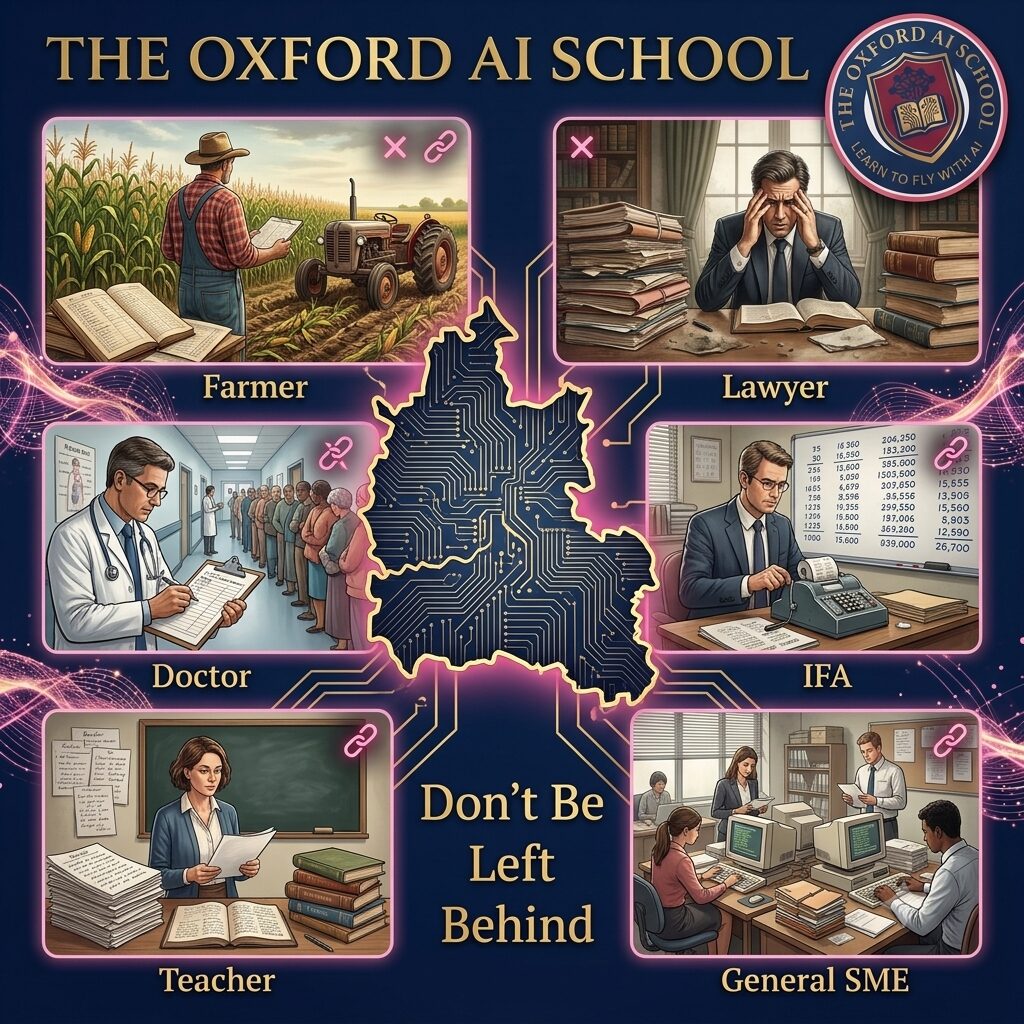
Behind sit the trades, mostly, and the older professional service firms. The accountancy practice where the partners “haven’t got time to look at it”. The building company that thinks AI means robots on the scaffolding. The shop owner who has heard the word a thousand times and still could not tell you what it does on a Tuesday morning. There is no shame in any of it. Most of these people are excellent at their actual job. They have simply been told, over and over, that AI is complicated, technical and probably coming for them, so they have kept their head down and hoped it would blow over. It will not.
The blockers are never the ones people expect
There are three, and skills is not really one of them.
First, knowledge. Not intelligence, knowledge. Nearly half of small firms, 46 percent, say plainly that they do not know how to use AI. They are not being modest. Nobody has ever shown them. They type “basic AI for my business” into Google at seven in the morning, get buried under jargon and sales pages, and close the laptop none the wiser.
Second, the word itself. “Artificial intelligence” sounds like it needs a computer science degree and a server room. It does not. If we called it “the thing that writes your quotes for you”, the adoption figures would double by Friday.
Third, time and nerve. Every owner I meet says the same line: “I’ll get to it when things are quieter.” Things are never quieter. And underneath the time excuse sits a smaller worry about looking foolish, or breaking something, or getting it wrong. So they wait. Meanwhile only about a quarter of firms already using AI have given anyone a scrap of proper training, which tells you most people are stumbling along on guesswork.
None of this is a skills problem. It is an access problem. The businesses in front did not find a secret — they found a starting point and someone to show them the ropes.
How to get a small business AI enabled
You do not need a strategy, a budget or a new hire. You need about an hour a week and a sensible order to do things in. Here is the one I give every Oxfordshire business owner who asks:
- Pick one job you hate. Not “AI for the whole company”. One task. The Tuesday admin, the quotes, the endless follow-up emails. Start where it hurts most.
- Open one free tool and talk to it like a person. Claude or ChatGPT. No setup, no card details. Type your problem in plain English, the way you would explain it to a new employee on their first morning.
- Give it your real work, not a test. Paste in the actual email, the actual customer enquiry, the actual messy spreadsheet. The magic only shows up when it is your own stuff on the screen.
- Get one person trained properly, once. An hour of easy AI training beats a month of guessing. Search for the top AI training programs in Oxfordshire, or plain AI training near Oxford, and you will wade through a lot of noise, so look for basic AI training in Oxfordshire and Oxford AI courses built for ordinary businesses rather than developers. That is exactly why we started The Oxford AI School: a school of AI for people who run a business, not people who write code.
- Write down what worked. One line in a notes file. “Claude wrote this week’s newsletter in nine minutes.” Small wins stack up, and they build the sort of confidence money cannot buy.
- Book the hour in the diary. Same slot every week. Protect it like a customer meeting, because that hour is where the whole thing either happens or quietly dies.
Do those six and you will be further along in a fortnight than most of the county.
The Oxfordshire around you is not waiting. Culham is being wired for the future while the shop three doors down still copies and pastes the same email forty times a week. Catching up has never been cheaper or less technical than it is right now. You are one afternoon away from being the business in front rather than the one behind. Pick the job you hate. Start there.
Common questions
Why are small businesses in Oxfordshire being left behind on AI?
It is an access problem, not a skills problem. AI use across UK firms has reached 54 percent, but that falls to around 36 percent for large companies and roughly 14 percent for the smallest firms. The blockers are knowledge (46 percent of small firms say they simply do not know how to use AI), the intimidating word “artificial intelligence” itself, and a shortage of time and nerve — not a lack of ability.
Where can I get basic AI training in Oxfordshire?
The Oxford AI School provides basic AI training in Oxfordshire built for ordinary business owners rather than developers. Sessions are jargon-free and practical, delivered in person across Oxfordshire — Witney, Oxford, Banbury and the surrounding towns — or live online, from 90-minute team introductions to full-day team workshops. See our programmes or the dedicated AI for Small Businesses session.
How do I get my small business using AI?
You need about an hour a week, not a strategy or a budget. Pick one job you hate. Open one free tool such as Claude or ChatGPT and talk to it like a person. Give it your real work, not a test. Get one person trained properly, once. Write down what worked. Then book the hour in the diary every week and protect it.
Is AI too technical for a small business?
No. “Artificial intelligence” sounds like it needs a computer science degree and a server room, but it does not. If we called it “the thing that writes your quotes for you”, adoption would double by Friday. The businesses racing ahead are simply the curious ones who found a starting point and someone to show them the ropes.

Harry Lang is the founder of The Oxford AI School, launched to help as many local SME professionals as possible learn the basics of AI in a way that’s practical, fun, easy and relevant.
You can connect with Harry on LinkedIn and follow the school on X, TikTok and YouTube.