In-house counsel, paralegals and legal operations
AI for Legal Professionals
Useful drafting and review habits for the people who still have to put their name to the work.
Discuss training for your legal teamA convincing citation takes seconds to generate and can take an awkward amount of time to explain when it turns out to be fictional. I would teach the checking habit alongside the drafting habit. This guide follows a single matter through an in-house team, from first review to handover.
Matter file: a fictional supplier agreement
A procurement colleague wants to know what changed between two versions. Start with two invented clauses on notice and renewal. Ask for the old wording, new wording and location in each draft. Give interpretation to the reviewer. It is surprising how much useful work fits inside “show me exactly what changed”.
Try this prompt
Compare these two fictional contract drafts [A and B]. List changes to notice, renewal and termination. For each row, include the clause number and exact supporting excerpt from each draft. Label missing provisions and unresolved questions. Leave advice and approval to the reviewer.

Set a different task for each role
- Paralegal. Create a draft chronology with a source beside every date. Flag where two documents disagree.
- In-house lawyer. Turn a verified comparison into a short options note for the business. Check each recommendation yourself.
- Legal operations. Write a handover checklist with document versions, named reviewers and the location of the approved work.
- Supervisor. Sample outputs and check whether a colleague can reproduce the citation and clause checks.
Review the draft with the originals open
Verify quotations, clause numbers and dates against the actual document. If the draft mentions a case or statute, consult the original authority or an approved legal research service and check its current status and relevance. Keep that check with the final note. A case name that sounds plausible has passed a remarkably low bar.
For SRA-regulated work in England and Wales, the SRA’s warning notice and supervision guidance explain the responsibilities around confidentiality and professional review. Agree an approved tool and matter workflow before processing confidential or privileged information. In-house teams should also check their organisation’s rules and applicable professional duties.
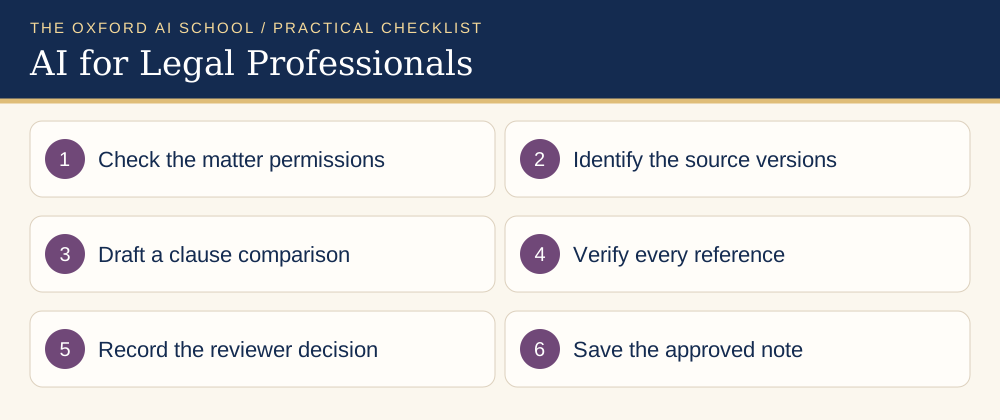
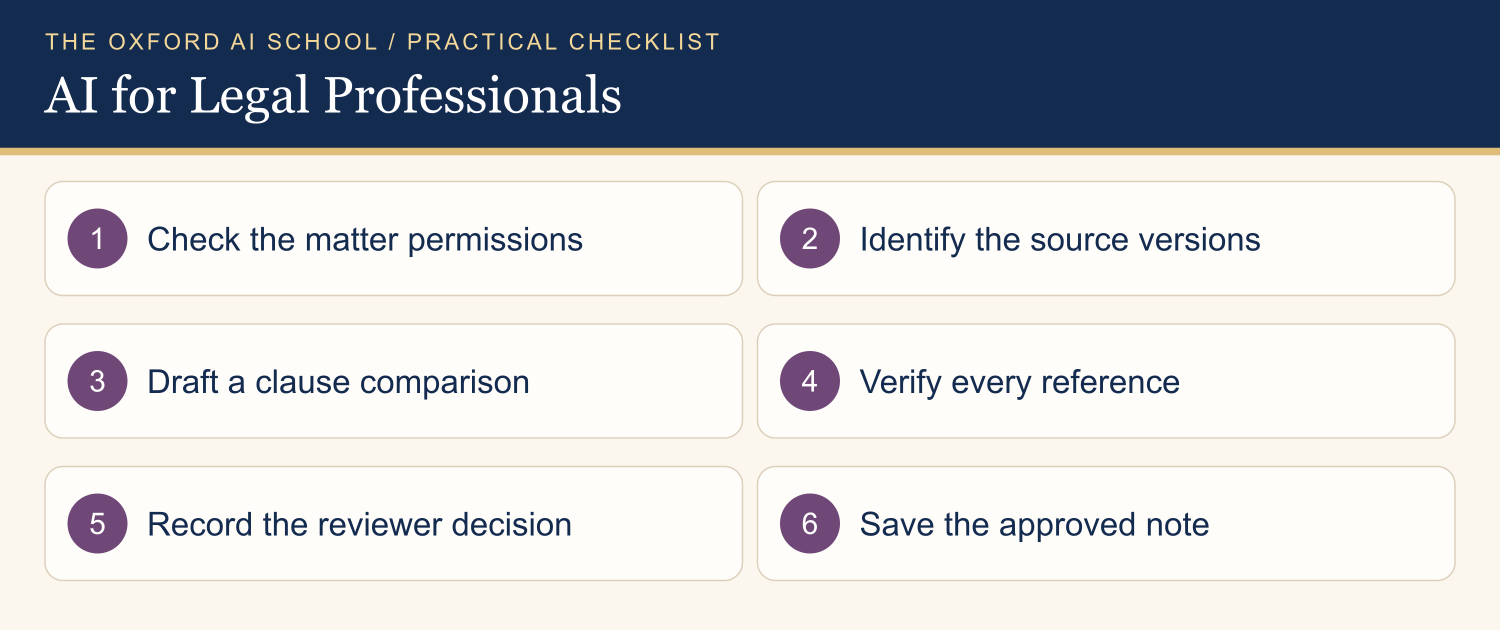
Read the checklist as text
- Check the matter permissions
- Identify the source versions
- Draft a clause comparison
- Verify every reference
- Record the reviewer decision
- Save the approved note
Choose individual skills or firm-wide training
For a legal team working across a business, start with a repeatable matter workflow and make the review step explicit. For a law firm planning training across practice areas, use the existing AI for Law Firms programme below. It covers the wider work of a practice, including client communications and back-office processes.
Training to try next
AI for Law Firms
The existing sector workshop for practice teams covering drafting, client communications and back-office workflows.
AI Policy Workshop
Agree access, client and matter information rules, and a named review route.
AI Basics Deep Dive
Practise tool choice, instruction writing and checking with approved material.
Official guidance
Keep learning
More AI training by industry
Related guides and courses
Frequently asked questions
How is this different from AI for Law Firms?
This guide is for individual legal roles and in-house matter workflows. The Law Firms page is the existing firm-wide training programme.
Can AI assist with contract comparison?
It can produce a draft comparison using approved material. A reviewer should verify versions, clauses and quotations against the source before interpreting the changes.
Who is responsible for AI-assisted legal work?
The relevant legal professional remains responsible. Follow applicable professional duties and supervision rules, including SRA guidance where it applies.