

The short answer
An AI skills matrix helps you work out who needs which training. This free template covers six skills, from choosing a suitable task to checking the result, with scores from 0 to 3. Set the standard each role needs, ask people to demonstrate it and record where they need help. You can edit the worksheet in your browser and save a completed copy.
What is an AI skills matrix?
Ask a roomful of colleagues how good they are at AI and you could spend the morning assessing their confidence. The keenest person may talk at length about an agent they're building, while a colleague scrolls through their phone for a picture of the managing director as a potato. The person who's barely touched the stuff will probably wish they hadn't come.
By lunchtime, you'll know who likes talking. You may still have no idea who can produce a reliable piece of work.
An AI skills matrix gives you a better way of finding out. It records the skills a job requires, what the person doing it can demonstrate and where they need help. The name sounds like something a consultant might charge you handsomely to explain. The principle is straightforward enough: watch someone do the work before deciding what to teach them.
Give them a familiar task, such as preparing a client update from a set of meeting notes. Look at the instructions they give the AI, which information they include and what they check afterwards. An answer that reads beautifully but invents a promise to the client should rather take the shine off the performance.
This is a suggested training exercise. The scores aren't a qualification. For a wider look at how the business is preparing for AI, including its leadership and processes, use an AI readiness assessment.
Which AI skills should you assess?
Start with the six below. They're skills you can see someone use, which makes them rather easier to assess than an enthusiastic claim to be “AI fluent”. Decide what each role needs before you start scoring. Your office manager and the person building your automations have different jobs.
| Skill | What to look for | Try this |
|---|---|---|
| Choose the task and tool | Knows where AI can help and when to use another approach. | Pick a suitable task from a normal working week. |
| Write a clear brief | Explains the job, audience, source material and required format. | Turn meeting notes into a client update. |
| Manage context | Chooses current, relevant information and notices what's missing. | Select the documents needed for a briefing. |
| Check the result | Checks facts, calculations and references against the source. | Find an error planted in a sample output. |
| Handle data safely | Uses approved tools and knows when to ask before sharing information. | Explain what to do with a document containing confidential details. |
| Repeat and improve | Can explain the process well enough for a colleague to follow it. | Write a short handover for a recurring task. |
Use fictional or approved material. Handing somebody a genuine customer file to see whether they'll upload it somewhere unfortunate is an unnecessarily exciting way to run a training assessment.
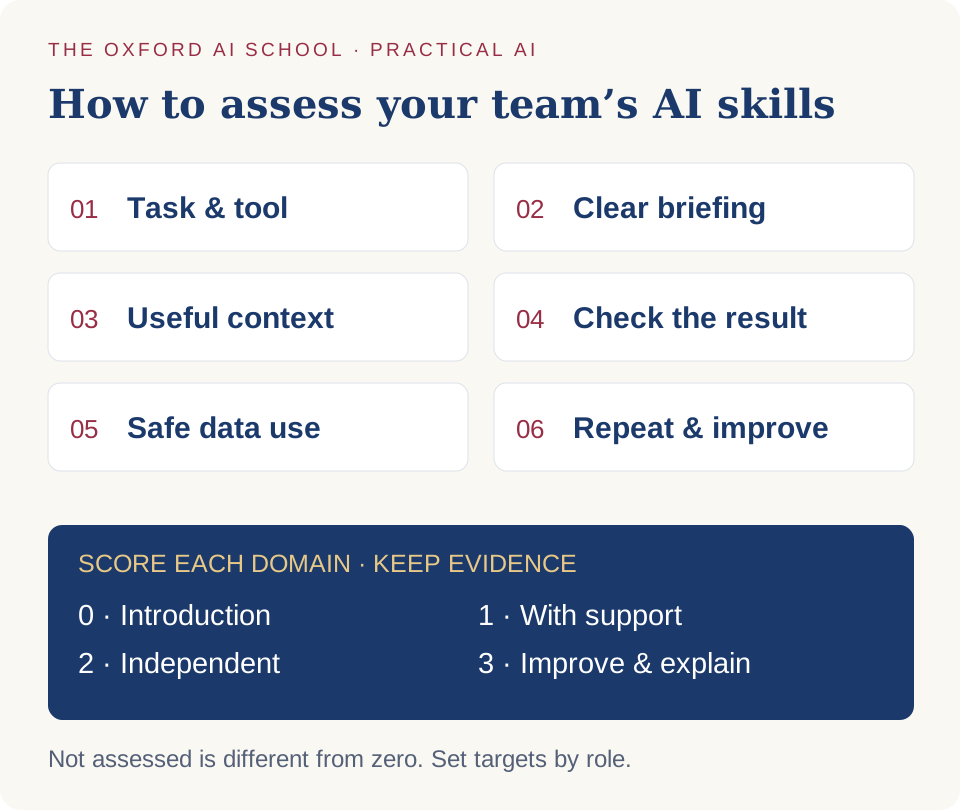
How do you score an AI skills matrix fairly?
Ask people to score themselves, then agree the result after watching them complete the exercise. Keep a sentence of evidence beside each score. That way, “I thought you looked quite confident” can't sneak into the record disguised as an assessment.
- Needs an introduction: can't yet complete the exercise.
- Works with support: can complete it with guidance or a checklist.
- Works independently: completes the task and checks it without prompting.
- Can improve and explain: handles a variation, explains their decisions and helps a colleague repeat the process.
Leave anything you haven't tested as “not assessed”. Giving someone a zero because you haven't seen their work tells you more about the assessment than the employee. Record the task, date, tool and help provided so you have something fair to compare at the next review.
I'd resist adding the scores into a grand total out of eighteen. A lovely big number can hide the one weakness that matters. It also invites a league table, at which point you've turned a training conversation into an office sport with very little to recommend it.
What does a completed skills matrix look like?
Take this fictional operations coordinator. They produce a weekly supplier update, and their manager has agreed that they need to work independently at level 2 across all six skills.
| Skill | Current / required | What to do next |
|---|---|---|
| Task and tool | 2 / 2 | Continue with the approved assistant. |
| Briefing | 2 / 2 | Keep the briefing structure that works. |
| Context | 1 / 2 | Practise selecting the current supplier terms. |
| Checking | 1 / 2 | Check delivery dates against the source records. |
| Data handling | 2 / 2 | Keep using the approved dataset. |
| Repeatability | 1 / 2 | Write a procedure for the weekly update. |
They need practice choosing sources, checking dates and documenting the process. Booking them onto another general introduction would mean sitting through things they already know. Pushing them straight into agents would leave the existing problems festering beneath a fresh layer of complexity.
Get the free AI skills matrix template
You can open the worksheet in your browser, fill in one copy per person or role and save the completed version. It covers the scores, evidence and training action, with space to name who's responsible and when you'll review it.
Download the worksheet
It's free. No account or email address required. Nothing you type is sent to us, and you'll need to save a completed copy before closing the page.
Open the editable template Download a blank copyAgree a task and the required scores before the assessment. Afterwards, pick the most pressing gap and give the person time to work on it. A review after a fortnight is a reasonable starting point if they do the job regularly. If they only do it once a month, adjust accordingly. The calendar is there to help you remember, not to make the exercise ridiculous.
How do you turn the scores into the right AI training?
If people struggle to brief an assistant or check its answers, look at AI Basics Deep Dive. For more confident users who need to get more from documents and tools, there's the AI tools deep dive. If nobody knows what information they're allowed to use, sort out the company rules with the people responsible. Our AI Policy Workshop can help with that.
For colleagues who already work independently, read our guide to advanced AI training. Choose something they'll have a reason to use afterwards. An agent course is a poor cure for boredom if their actual problem is selecting the right version of a document.
When you review progress, give them fresh material and watch again. Are the dates right? Did they catch the missing information? Can they finish without you hovering? Those answers should decide what happens next. You can file the matrix once it's done its job.
Frequently asked questions
What is an AI skills matrix?
It records the AI skills a role needs, what someone can demonstrate and where they need training. Use it to plan the next course or practice session. The scores are a suggested rubric, not a qualification.
Is the AI skills matrix template free?
Yes. Open it, download it or print it without registering. Fill it in using your browser, then select Save completed copy to keep your entries.
How should we score employees?
Watch them complete a task and agree a score from 0 to 3 for each skill. Record what you saw and any help they needed. Leave skills you have not tested as Not assessed.
Should everyone aim for the highest score?
No. Set the required level for the job. Someone who can complete their work independently and check it properly may have everything they need for that role.
How often should we review the matrix?
Review after training and enough practice to show whether it helped. A fortnight can work for a frequent task. Revisit the assessment when the job or tools change significantly.
How is this different from an AI readiness assessment?
The matrix looks at people and their skills. A readiness assessment can also cover the organisation: its leadership, processes, data and plans for adopting AI.