The best AI course for a beginner is a short, plain-English, hands-on one that gets you using real tools in the first hour, not a computer science module heavy on theory. Look for practical tasks, a human to ask questions, and a focus on your actual work. Free courses are a fine way to test the water. A guided course is how most people get properly good.
Type "best AI courses for beginners" into Google and you will drown in listicles pointing at the same five university MOOCs, most of which assume you want to build a neural network by Friday. You almost certainly do not. Here is how to pick a course that actually suits a working professional, and what separates a good one from a waste of an afternoon.
The short version
- The best beginner course is practical, plain-English and hands-on, not theory-heavy.
- You do not need coding or maths. Avoid any course that assumes you do.
- Free courses are great for testing interest. Guided courses are better for real skill.
- Look for real tools, real tasks and a real person to ask.
- The fastest route to value is learning on the work you already do.
7 things a great beginner AI course has
Plain English
No jargon, no acronyms dropped without explanation. If the intro confuses you, the course will too.
Hands on the keyboard
You use real tools in the first session. Watching slides about AI is not learning AI.
Built for non-techies
Assumes zero coding and zero maths. Your background is marketing, law or admin, not machine learning.
Tied to real work
Uses your actual tasks and documents, so the skills transfer to Monday morning.
A human to ask
Somewhere to say 'I don't get it' and get a straight answer. Forums do not count.
Current tools
Teaches ChatGPT, Claude and Gemini as they are now, not a screenshot from two years ago.
Safety and checking
Shows you how to spot mistakes and protect data, not just how to prompt.
Are free AI courses for beginners good enough?
Start free. Genuinely. A couple of hours on a free course tells you whether this clicks for you and costs you nothing but the time. Google, the University of Helsinki and others run solid free introductions, and we list the best of them in our guide to the best free AI courses.
Here is the honest bit though. Free courses are made for the widest possible audience, which means they cannot use your work, cannot answer your specific question, and cannot tell you why your prompt keeps producing waffle. That is exactly where a guided course earns its fee. You are not paying for information. Information is free and endless. You are paying for someone to compress six months of trial and error into an afternoon, using your job as the worked example.
Not sure where you are starting from? Take our free two-minute assessment and get pointed at the right level.
Why most ‘best AI course’ lists get it wrong
The big online courses from famous universities are excellent, for the people they are built for. Aspiring data scientists. If that is not you, they are a slog: weeks of probability, Python and linear algebra to reach a point a professional could reach in an afternoon of practical training. Nothing wrong with them. Wrong tool for your job. It is like buying a Ferrari and only using it to drive to Lidl.
What a good beginner AI course actually covers
At The Oxford AI School we built our beginner programmes for exactly the person the MOOCs ignore: the professional who is short on time, allergic to jargon, and quietly worried about being left behind. Our Intro to AI starts from absolute zero and has you producing real work in the first session. Plain English, hands on the keyboard, and the credibility of an Oxford address without any of the Oxford stuffiness.
We run it for individuals one-to-one, for teams, and tailored to specific sectors, from law firms to accountants. The through-line is the same. Less theory, more Tuesday.
How to choose an AI course and start this week
You do not need to enrol in anything to begin. Pick one task you do every week and dislike. Writing a certain email, summarising a report, formatting some notes. Open ChatGPT or Claude, describe the task the way you would to a colleague, and see what comes back. It will not be perfect. Learning to make it better is the whole skill, and it is a skill you can absolutely acquire.
The best course is the one you finish, using the tools you will actually reach for at work.
Free to test, guided to get good. That is the shortest honest answer to the question. Now go and hand over a task you hate.
Best AI courses for beginners: frequently asked questions
The exact things people type into Google and ask AI about this topic.
What is the best AI course for a complete beginner?
The best beginner AI course is short, plain-English and hands-on, gets you using real tools like ChatGPT and Claude quickly, and is built for non-technical people. Avoid theory-heavy computer science courses unless you want to become a data scientist. A guided course tied to your own work gives the fastest results.
Do I need coding or maths to take an AI course?
No. The most useful courses for professionals assume zero coding and zero maths. The valuable skill is knowing what to ask AI for and how to check the answer, which anyone can learn regardless of background.
Should I take a free or paid AI course?
Start with a free course to test your interest at no cost. Move to a guided or paid course when you want real skill, because paid courses can use your actual work, answer your specific questions and compress months of trial and error into a short session.
How long does it take to learn the basics of AI?
Most people reach a useful working level in a few weeks of regular practice, and can produce genuinely helpful results in their first guided session. It is far quicker than people expect because you are learning to direct a tool, not to build one.
What should I look for in a beginner AI course?
Look for plain English, hands-on practice with current tools, a non-technical focus, tasks tied to your real work, a human you can ask questions, and coverage of accuracy and data safety. If a course misses more than a couple of these, keep looking.
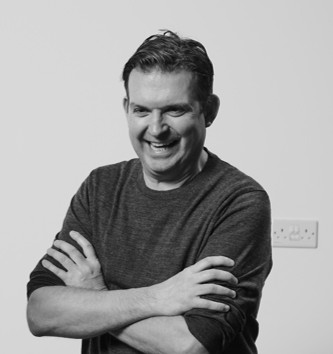
Harry Lang founded The Oxford AI School after 20+ years in marketing leadership. We help business owners, teams and individuals across Oxfordshire and the UK use AI tools like Claude, ChatGPT, Gemini, Perplexity and Microsoft Copilot in a way that is practical, jargon-free and genuinely useful.
Want this applied to your own work, with someone in the room? Book a free 10-minute intro call.