

The short answer
Advanced AI training should help you tackle harder business tasks, such as preparing proposals from source documents or building a reporting process your colleagues can reuse. Look for teaching on selecting information, testing results, connecting tools and checking work. You'll need a sound grasp of everyday AI first. Arrive with a job you want to improve and ask the provider what you'll be able to do with it afterwards.
What does advanced AI training mean for a business?
There are only so many times you can ask AI to improve an email before you begin to wonder whether this technological revolution has rather undersold itself.
The email is lovely. Positively oozing professionalism. Unfortunately, the proposal you promised a client still needs writing, three documents disagree about the price and the person who understands the reporting spreadsheet is on holiday.
That's where advanced AI training ought to earn its fee. It should help you tackle work with several moving parts: selecting the right information, breaking the job into stages and checking whether the result stands up. You might build a repeatable proposal process, produce a briefing with traceable sources or connect tools to handle part of a recurring job.
I'd be suspicious of a course whose definition of advanced rests mainly on the number of acronyms in the brochure. Ask what you'll be able to do by the end. If the answer takes ten minutes and still hasn't mentioned your work, keep asking.
We're talking here about using AI in a business. Developing machine-learning models is a different subject, with its own technical requirements.
How do you know when your team is ready?
Watch someone use an ordinary assistant on a familiar job. Can they explain what they want, supply the right material and spot when the answer has gone astray? Do they know which information they can share? Can they recover from a poor result without summoning a colleague?
Get those habits in place first. There's very little glory in automating a process whose proudest achievement is producing the wrong answer more frequently.
- Choose a recurring task and identify what's frustrating about it.
- Check that the person can write a brief the assistant can follow.
- Ask them to trace important claims back to the source.
- Confirm the approved tools, permitted information and required sign-off.
- Make room in the working week to practise after the course.
The AI skills matrix template can help if ability varies across the team. You may end up booking different sessions for different people. That is a better use of the budget than organising a wonderfully tidy calendar full of the wrong training.
What should an advanced business AI course cover?
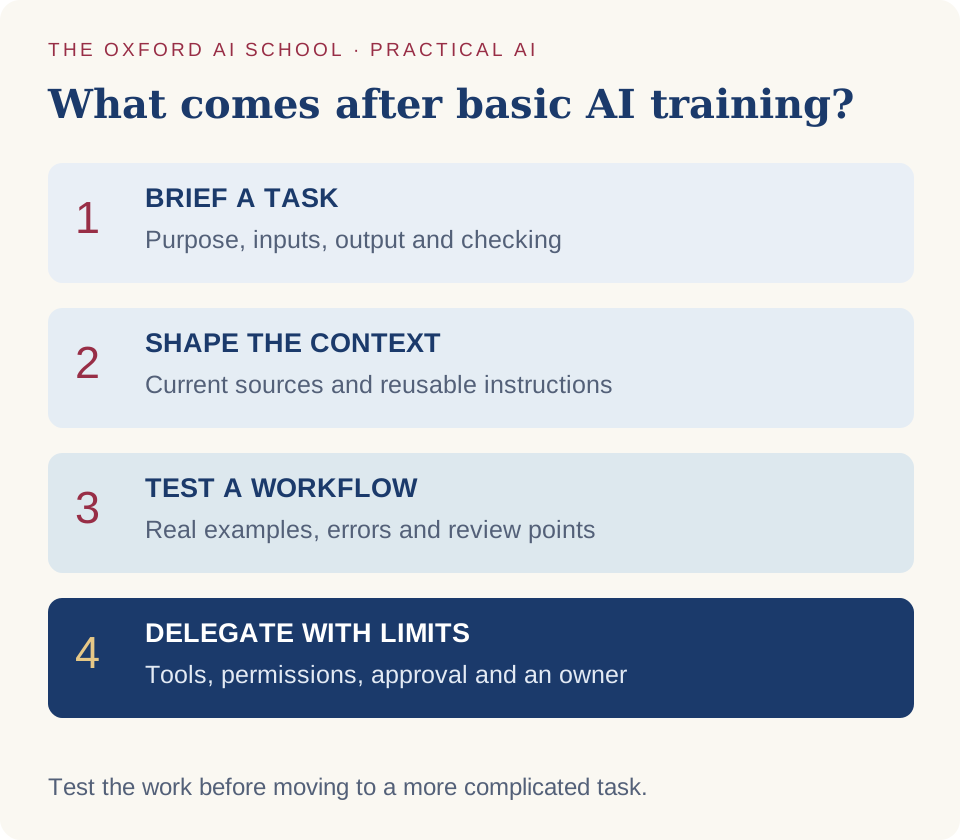
Choosing what the AI needs to know
Feeding an assistant every file in the company is rather like emptying the fridge into a saucepan and expecting dinner. Learn which documents belong in the task, whether they're current and what's missing. Make the instructions easy to distinguish from the material the AI is supposed to read.
Writing instructions someone else can use
Describe the job, required inputs, expected output and checks in plain English. Then hand the instructions to a colleague. Watch where they get stuck. That will tell you considerably more about the quality of your process than admiring it yourself.
Trying to break the result
A course should give you time to test incomplete briefs, contradictory documents and changed dates. Decide what an acceptable answer looks like before you run the test. Otherwise it's remarkably easy to lower the standard once a handsome-looking response appears.
Checking work as it goes
Split a bigger job into stages you can inspect. A proposal might start with extracting the requirements, then checking the scope, drafting the response and reviewing it against the brief. Work out who checks each stage and what sends it back for another attempt.
Understanding connected tools
Find out what an AI system can read or change when you connect it to another tool. Practise with limited access and keep approval in place for consequential actions. Asking it politely to behave offers rather less protection than controlling what it can actually do.
Keeping the thing working afterwards
Decide who will update the instructions, investigate mistakes and run another test when something changes. They should also know how to stop it. None of this looks especially glamorous on a slide, but you'll appreciate it when the original creator is away and a supplier changes the format of a file.
What does advanced AI look like in an ordinary working week?
Imagine a business development team writing a proposal every week. This is a fictional example, although the irritation may feel familiar. Somebody digs out an old proposal, pastes the new brief into an assistant and spends the afternoon removing promises nobody agreed to make.
I'd use the training session to build the following process:
- Select approved service descriptions, current prices and a relevant previous example.
- Extract the customer's requirements into a checklist, with references to the brief.
- Flag questions for the account lead before drafting.
- Draft the proposal using the agreed structure.
- Check every promise, price and date against its source.
- Pass the reviewed draft to a named person for final approval.
A colleague should be able to follow the same process and see how the answer was reached. Keep sending the finished proposal under human control. The AI has no business awarding an unsolicited discount because it fancies its chances in sales.
Time the whole job, including the checking and corrections. A draft produced in thirty seconds loses some of its appeal if somebody then spends two hours picking invented commitments out of it.
How do you choose the right advanced AI course?
Ask what you'll build, what you need to know already and how you'll test the finished work. I'd also ask the trainer to show you a failure. Anybody can rehearse the bit that works. Their explanation of what went wrong will tell you whether they can teach you to fix it.
| Ask this | What the answer should cover |
|---|---|
| What will we leave with? | The process, instructions or prototype you'll produce. |
| What must we already know? | Specific prerequisites and a way to check them. |
| Can we use our own examples? | Which approved materials to prepare beforehand. |
| Which licences and access do we need? | A list supplied before the session, including extra costs. |
| How do we practise afterwards? | A task to repeat, someone responsible and a review date. |
Be clear about how far the course takes you. A working prototype may still need technical work, security checks and ongoing support before the business relies on it. Ask who is doing those jobs and what they will cost. Discovering the answer afterwards is an expensive way to improve your questioning technique.
Which Oxford AI School module should you take next?
For better everyday work across assistants, look at the tools deep dive. If you want to work with local files and repeatable processes, start with Introduction to Claude Code. Advanced Claude Code follows that module or equivalent experience.
Building Agents in Claude Code comes after the advanced module or equivalent experience. Our guide to AI agent training explains what to check before heading in that direction.
Bring the job that's been annoying you for months. Explain how long it takes, where it goes wrong and what you'd like to change. That gives the trainer something to work with, and gives you a fair basis for deciding whether the course was worth your money.
Frequently asked questions
What is advanced AI training for business?
It helps business users handle more complicated work with AI, including selecting source material, building repeatable processes, testing results and connecting tools. Ask which tasks a particular course will help you complete.
Do I need to know how to code?
You can learn many of these skills without programming. More complicated connections and systems may need technical help. Check the course and software requirements before booking.
How is advanced AI training different from basic training?
Basic training covers briefing everyday assistants, checking their answers and handling information safely. Advanced work builds on that foundation with longer processes, more demanding tests and, where appropriate, connected tools.
Does advanced training always involve AI agents?
No. Reusable instructions or a fixed sequence of steps may do the job perfectly well. Consider an agent when the task needs a system to choose and adjust its next steps.
Which Claude Code module comes first?
The Oxford AI School pathway starts with Introduction to Claude Code, followed by Advanced Claude Code, then Building Agents in Claude Code. Equivalent experience may meet the prerequisites. Check the module pages when booking.
How should we measure whether the course helped?
Compare similar work before and after training. Count the time spent preparing, checking and correcting it, along with errors. Check whether the person uses the process again and whether a colleague can follow it.