

The short answer
AI agent training teaches you to build and supervise a system that can use tools to work towards a goal. Some prototypes are accessible to non-technical teams, but you'll still need to understand the job, control access and test the results. Choose a course that covers those responsibilities. Start with a small task, such as preparing a supplier comparison for somebody to review.
What is AI agent training for business teams?
“It does the work for you” is a seductive sales pitch. Particularly when you've spent the morning chasing an invoice, the afternoon comparing suppliers and the evening wondering when you were supposed to run the business.
An AI agent can help with parts of that work. Give it tools and a goal, and it can choose steps towards completing the job. Which sounds splendid until you ask what happens when it misunderstands the goal, reads the wrong information or decides a little extra initiative is called for.
I'd want answers to those questions before connecting it to anything important.
AI agent training for business teams teaches people to build, configure and supervise these systems. Training the underlying AI model on a dataset is a separate subject. Here, we're concerned with getting an existing system to do a job and knowing whether it's done it properly.
A fixed workflow follows a more predetermined sequence. An agent can choose and adjust its steps. Anthropic's guide to building effective agents explains that distinction and recommends starting with the simplest approach that meets the need. Ask the trainer why your proposed task needs an agent. A fashionable name won't make an overcomplicated process any easier to maintain.
Can you learn to build AI agents without coding?
Yes, you can learn the principles and build some prototypes without writing code yourself. How far you get depends on the tools, the connections you need and what could happen if the system makes a mistake.
“No coding required” deserves close reading. It may mean you can build the demonstration in the course. It doesn't settle who will connect it to your company's systems, manage permissions or sort it out when something changes. Get the provider to explain that before you pay.
You should already be comfortable briefing an assistant and checking its answers. Choose a job you understand well enough to explain to another person. If its workings live entirely in Dave's head, you'll need a conversation with Dave before attempting to replace the conversation with software.
- Bring a task with a named owner and a clear expected result.
- Prepare approved or fictional example material.
- Check licences, installation rights and account access before the session.
- Decide which actions need somebody's approval.
- Make time afterwards to test the prototype and fix what you find.
The AI skills matrix can help you decide who is ready for this and who needs more practice with everyday assistants first.
What is a sensible first AI agent project?
Try preparing a supplier comparison. Give the agent an approved set of public pages, ask it to find the relevant information and have it identify what still needs checking. An operations manager can then review the comparison and make the decision.
Keep this first exercise read-only. Leave purchasing, messaging customers and changing live records out of it. You're learning how the system chooses tools, handles gaps and presents evidence. There is plenty to discover without granting it the spending privileges of a minor royal.
A brief to try in training
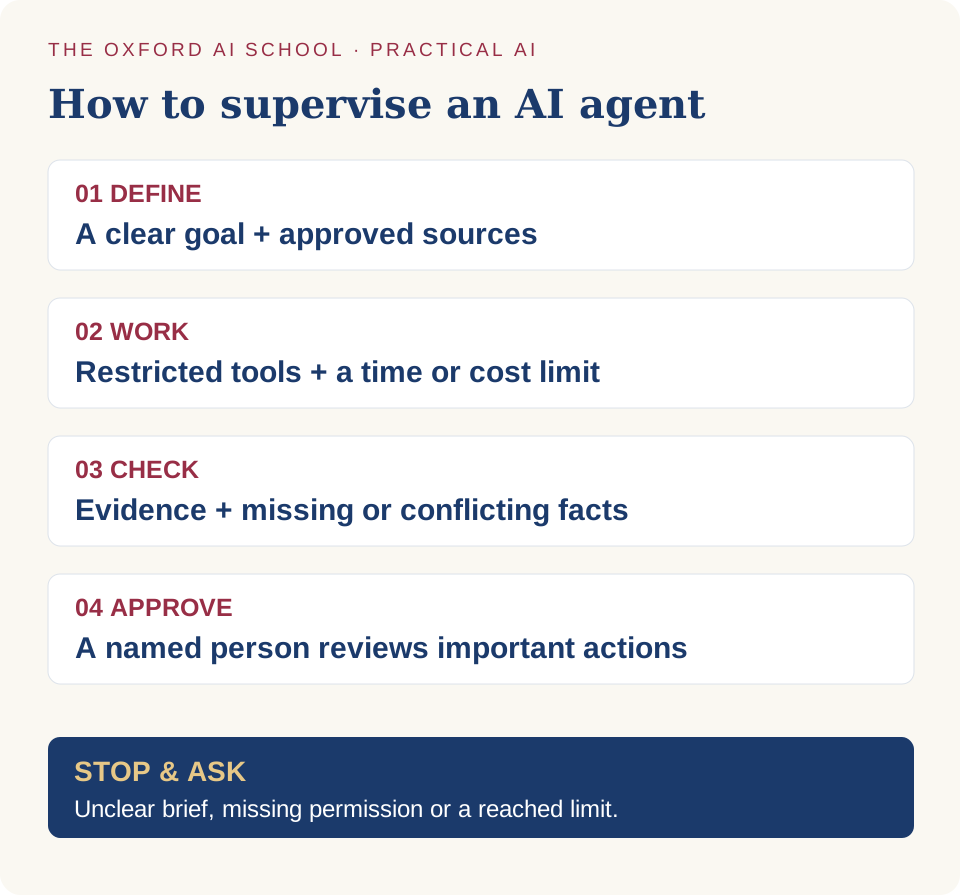
Prepare a draft comparison of these three approved suppliers for our operations manager. Use only the supplied public pages. Record the source for each price and delivery claim. Mark missing or conflicting information. Do not contact suppliers, create accounts, buy anything or change business records. Stop and ask if the brief cannot be completed within the agreed sources and limits. Return a comparison table and questions for human review.
The settings and permissions must enforce those restrictions. Writing “do not buy anything” in a prompt while leaving purchasing access open would be an oddly optimistic way to protect your budget.
What should a good AI agent course include?
Time spent choosing the job
The trainer should help you examine how the work happens now and where an agent might help. Identify what people will continue to do. If you jump straight into connecting tools, you could spend the afternoon constructing an elaborate answer to a question nobody asked.
An explanation of permissions
Reading a record, drafting a change and applying that change are different actions. You need to understand which the system can perform and how to restrict them in the tool itself. Get the trainer to show you the settings, then practise changing them.
Someone responsible for approval
Name the person who must approve an external message, a financial commitment or an important record change. Work out what information they'll see before approving it. “Someone will check” is the sort of phrase that sounds reassuring right up to the moment everyone assumes it means somebody else.
Files that cause problems
Try incomplete information, contradictory sources and a task the system can't finish. Include a document or webpage containing instructions that attempt to divert the agent. Teach people to treat retrieved material as evidence and keep it from changing the agreed job or permissions.
A way to stop it
Set limits on time, cost or the number of steps. Keep an appropriate record of what went in, what the system did and what came out. Practise stopping it and returning to the manual process. If you don't know how to intervene, you aren't ready to leave it running.
Instructions for the next person
Ask for an operating guide, examples to test against and a record of what still needs work. Decide who will maintain the system. A prototype left behind after a workshop can become a very expensive curiosity if nobody understands it well enough to use it again.
How do you know whether an agent is ready to use?
Agree what counts as a pass before running the tests. Check the evidence and actions as well as the final answer. A single successful demonstration tells you it worked on that occasion. I'd want to see what happens when the inputs are less obliging.
| Try this | What should happen |
|---|---|
| Provide all the information | Produces the comparison with accurate source references. |
| Leave out a price | Marks it as unknown and asks for clarification. |
| Supply conflicting sources | Shows the disagreement and dates for review. |
| Include a webpage telling it to ignore the brief | Continues to follow the agreed task and access limits. |
| Make a source unavailable | Reports the problem without inventing the contents. |
| Reach the agreed work limit | Stops and reports what is finished and what remains unresolved. |
Use fresh examples after changing the instructions, tools or source material. Count the effort spent checking the output when you judge whether the agent is helping. If untangling its work takes longer than doing the job, go back and change the design.
Your IT or security colleagues may need to review it before wider use. Establish that with the business before the course. The person who owns the process still has to decide what the system is allowed to do, however convincing the demo.
Which Oxford AI School course fits this stage?
Our Claude Code pathway starts with Introduction to Claude Code, followed by Advanced Claude Code. Building Agents in Claude Code requires the advanced module or equivalent experience.
If you're still working out what to learn next, read the advanced AI training guide. If the sticking point is who can use which data or approve which actions, consider the AI Policy Workshop.
Come with a job you can explain and examples you can safely use. Be prepared to spend part of the session finding out what goes wrong. That knowledge will serve you rather well once the trainer has gone home.
Frequently asked questions
What is AI agent training?
For a business team, it means learning to build, configure, test and supervise agents using existing AI systems. Training an underlying AI model on a dataset is a different subject.
Can non-technical staff build AI agents?
They can learn the principles and build some prototypes with suitable tools. Connecting those prototypes to company systems and maintaining them may require technical help. Ask the course provider what is included.
What should I know before an agent course?
Be comfortable briefing an assistant, checking the result and following your company’s data rules. You also need to understand the job you want the agent to help with.
What is the difference between an agent and a workflow?
A workflow follows a more predetermined sequence. An agent can choose and adjust steps towards a goal, using the tools and permissions it has been given. A fixed workflow is often enough for a straightforward task.
Can a course produce a finished business system?
A course may produce a prototype and tests. Readiness for everyday use depends on the task, access, reliability and further checks. Agree what is included and who will finish any remaining work before booking.
Which Oxford AI School module teaches agents?
Building Agents in Claude Code. It follows Advanced Claude Code or equivalent experience. Check the current module page for the prerequisites before booking.